This Blog allows visitors to keep up to date with news and events at the Great Wood. Some images can be clicked to show a larger version.
New signs in the car park
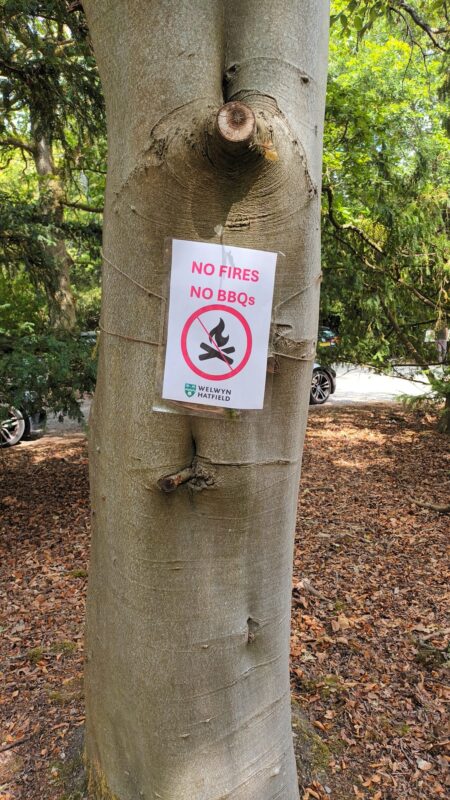
No Fires No BBQs sign
You may notice we have put up some new signs in the car park.
These are to remind everyone that Fires and BBQs are not permitted within the woods. This restriction is always in place throughout the year in Northaw Great Woods.
Due to the current drought and the associated risks, Welwyn Hatfield Borough Council have requested that the signs be instated as a polite reminder to us all.
Numbering the 62 waymark posts
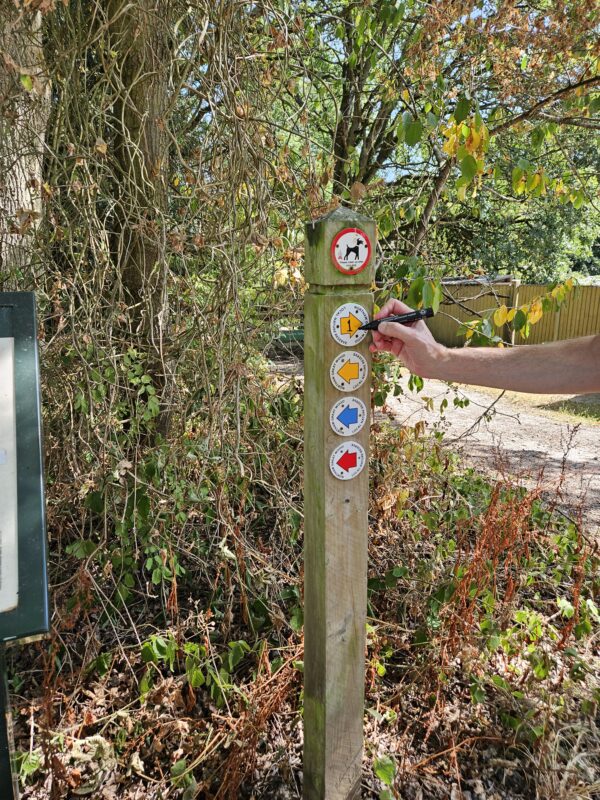
Waymark post Number 1
Following our recent survey of the 62 waymark posts on the three trails within the woods, we have begun the task of numbering them all. This will help with identifying and reporting a post if it is in need of repair or reinstatement.
Over time the waymark discs are nibbled by squirrels and pecked by birds so need replacing. The posts also rot in the ground and become tired and wobbly!
Clearing the Yellow trail July 2026 despite drought officially being declared in half of England!
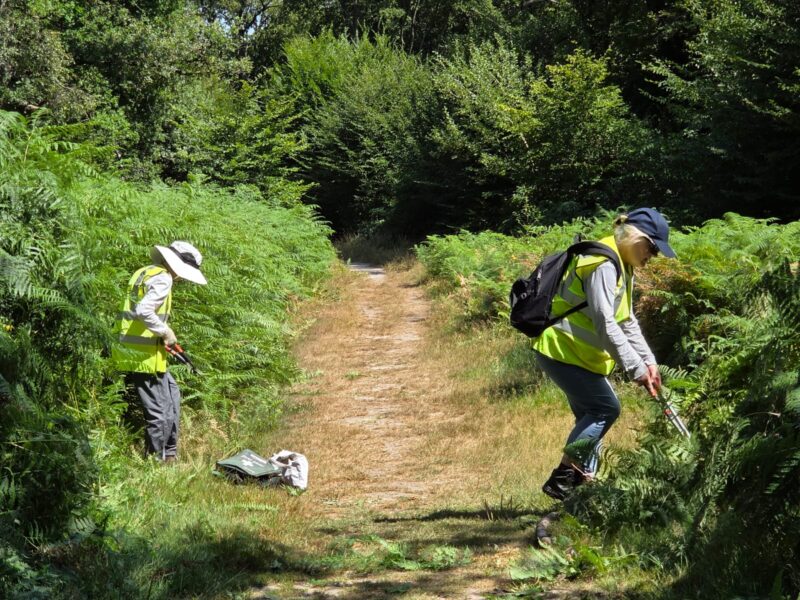
Work party clearing bracken ferns and brambles along the yellow trail
Throughout the summer the Friends of Northaw Great Woods work parties have been keeping the trails free of bracken ferns, brambles and other vegetation that is constantly encroaching and obscuring the pathways
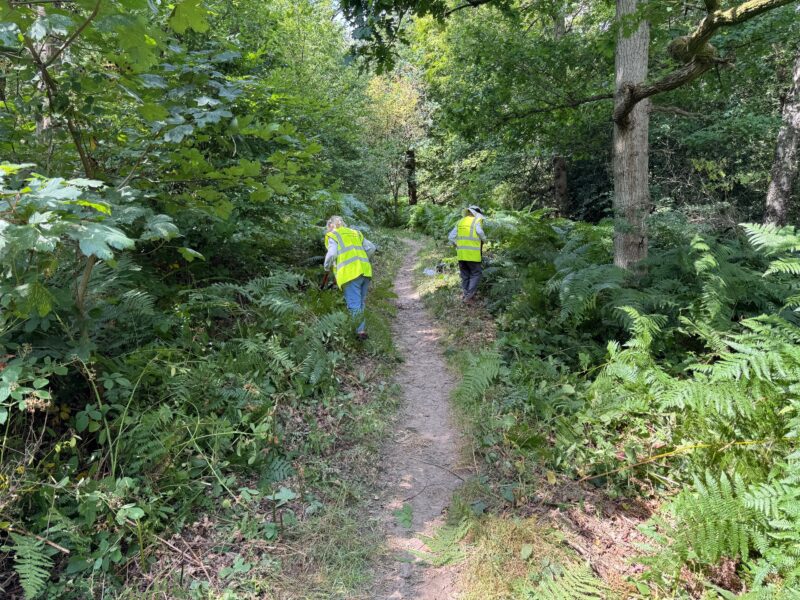
Trail path clearing throughout the summer
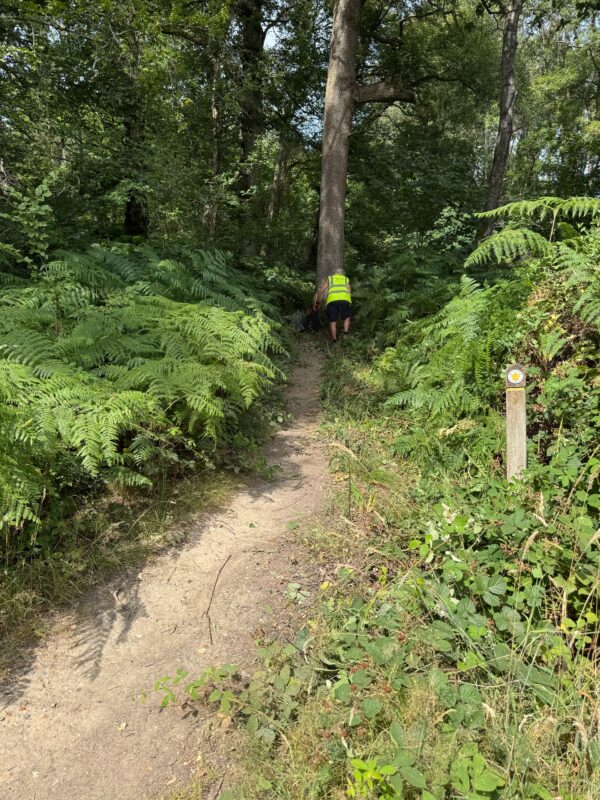
A work party volunteer clearing the trail and revealing the waymark post that had been enveloped by bracken ferns and brambles
This work continues throughout the growing season, even though we have had weeks without rain and drought has officially been declared in half of England!
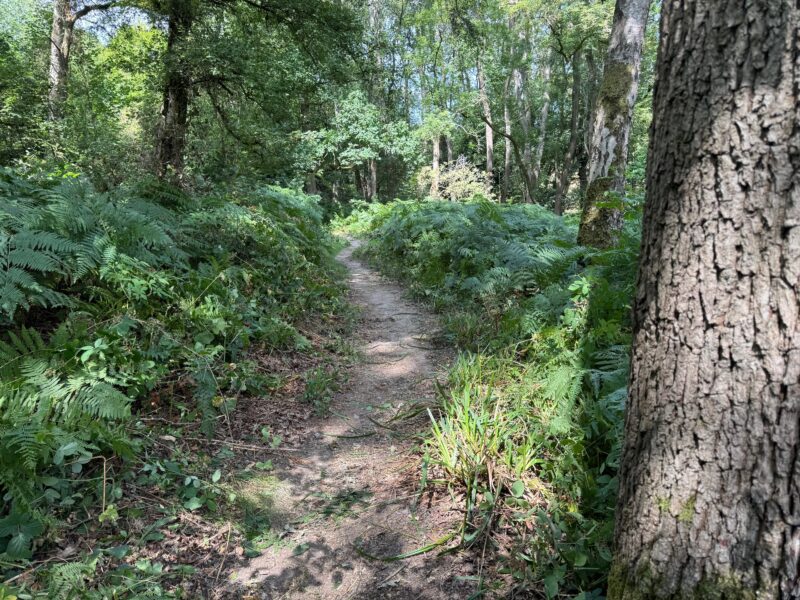

A visiting dog enjoying the open Yellow trail
Vegetation Survey
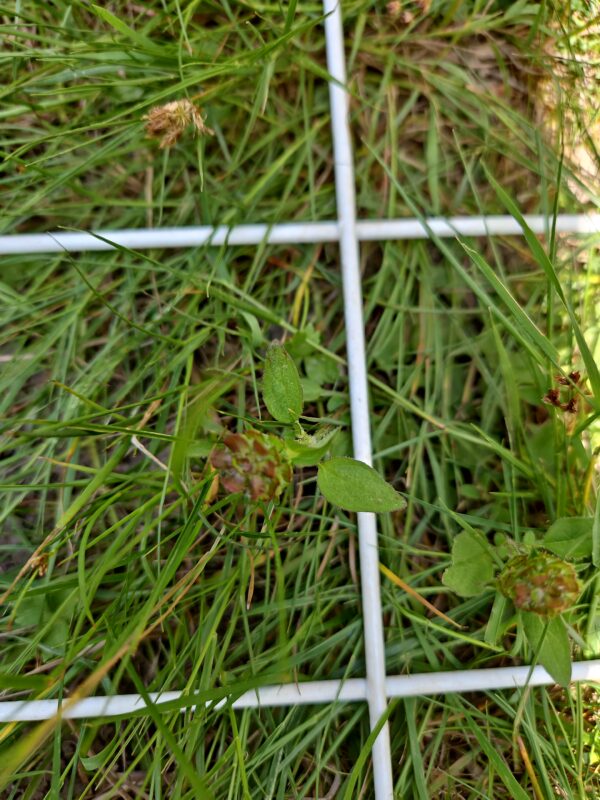
Wire Quadrat with ‘Self Heal’ plant
A couple of weeks ago, in soaring temperatures, the FONGW team divided into two teams.
One team carried out ongoing work on the bridges, removing debris between the planks to increase airflow and prevent rot.
The other team carried out one of the periodic ‘Vegetation’ Surveys.
The Vegetation surveys are used to monitor ecological changes in the woods. Specific 25 metre Transect lines are used so that the abundance/distribution of individual plant species can be tracked and environmental changes documented.
Once a Transect line is located in the woods, a field measuring tape is anchored at either end of the 25 metre span.
A wire Quatrat containing 25 squares (each 10cm x 10cm) is placed on the ground along the Transect line at 1.8 metre intervals, positioned either to the East or the West of the line. The leading corner point of the Quadrat is placed at each 1.8 metre mark as the survey progresses.
Each sampling square is then studied and the contents are collectively recorded. Some species are individually counted and others recorded as a percentage of the overall Quadrat.
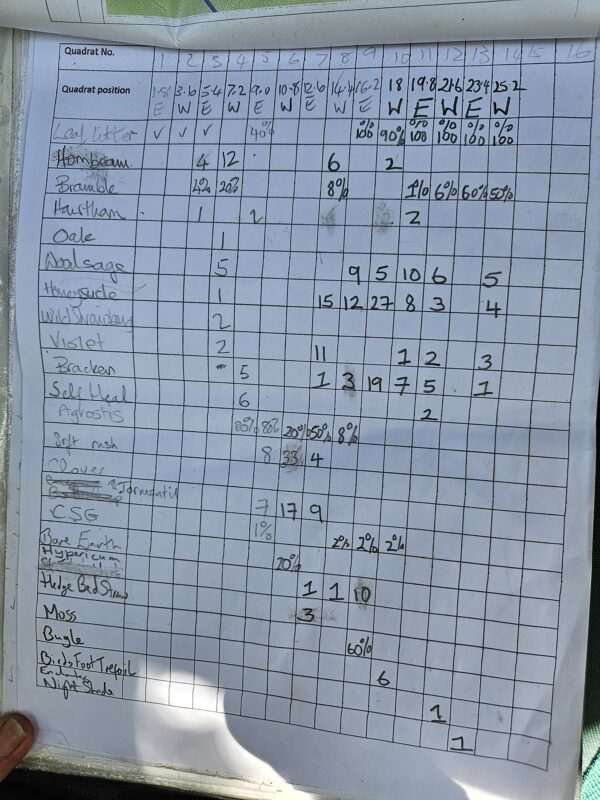
Vegetation Survey July 2026 to be transferred to the database
Lastly, two plastic marker tags are tied to the anchor points of the Transect line for future reference.
Clearing fallen Birch tree on the Yellow trail
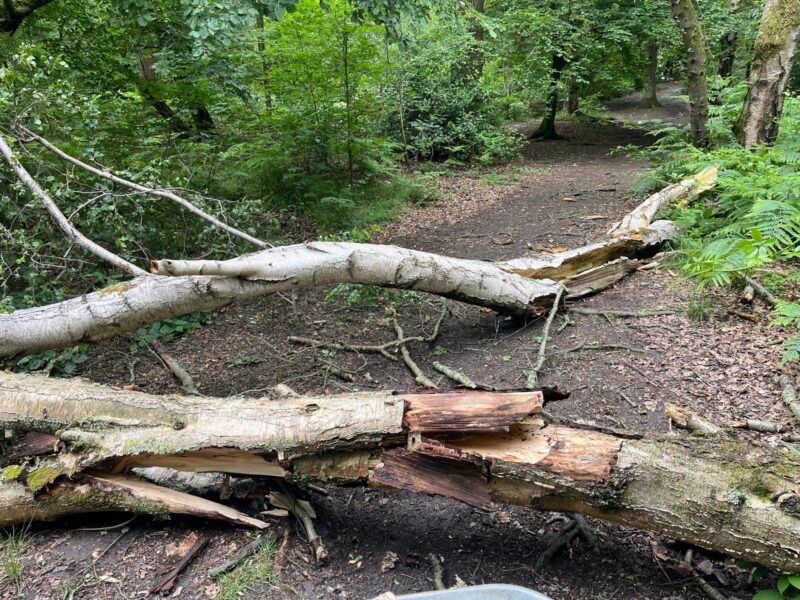
Fallen Birch tree on yellow trail obstructing the path
Last month, despite the sweltering heat, the Friends of Northaw Great Woods went down to the furthest point on the Yellow trail to clear a fallen Birch tree that was obstructing the path.
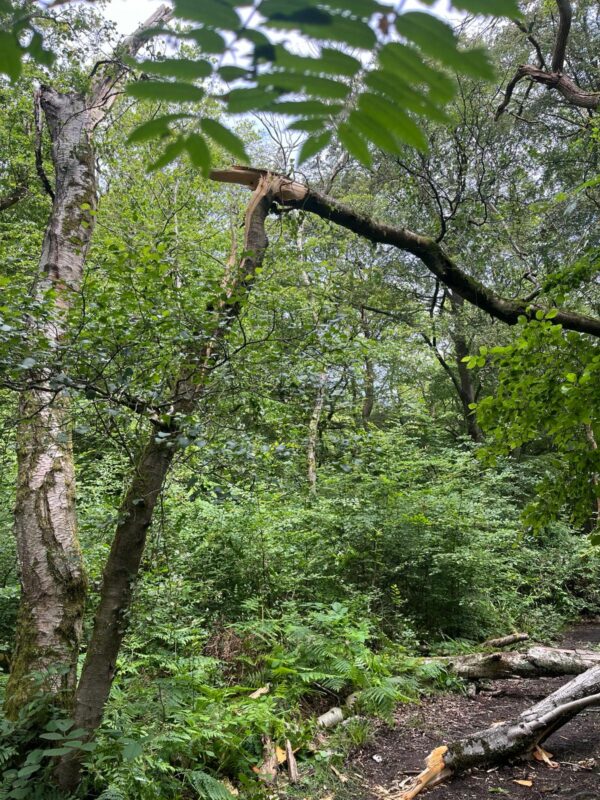
Dangerous tree at the same site felled
While at the site a dangerous tree was felled to make the trail safe again

Stumps left after clearing the fallen Birch tree
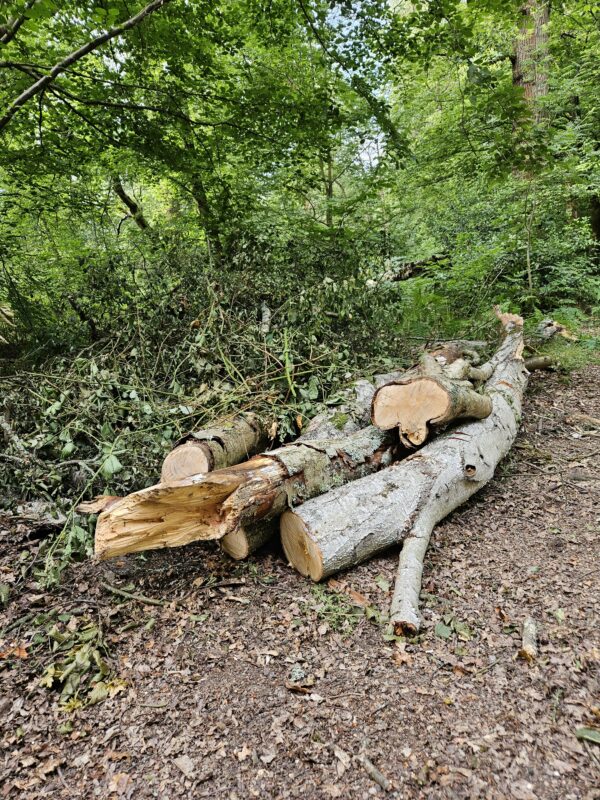
Trunks cut and cleared
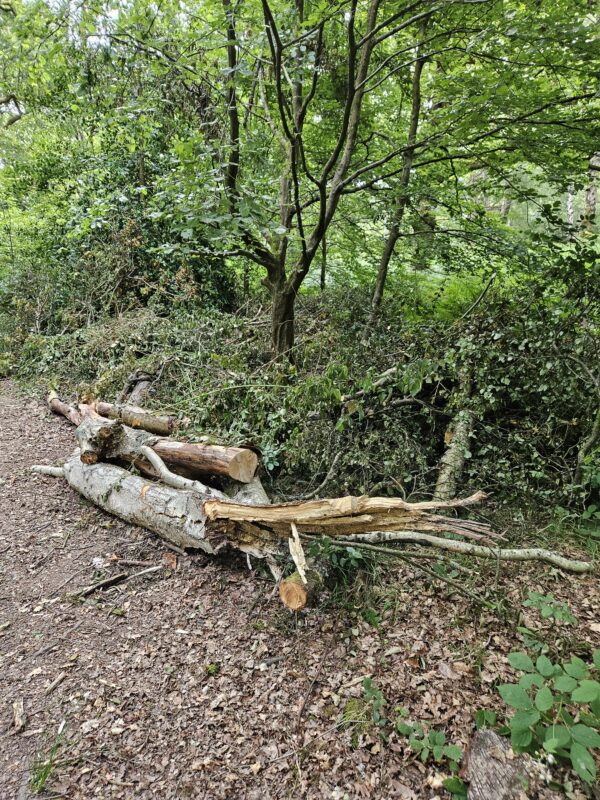
Felled dangerous tree
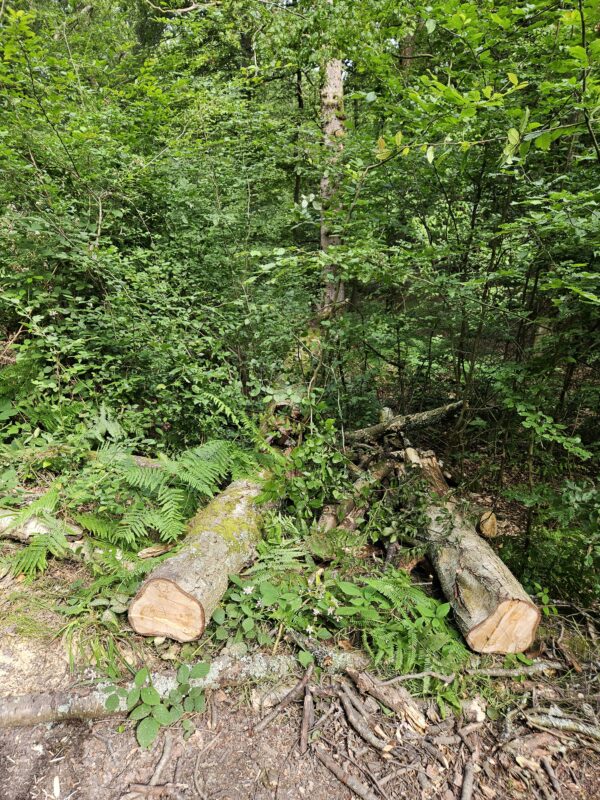
Trunks left to season
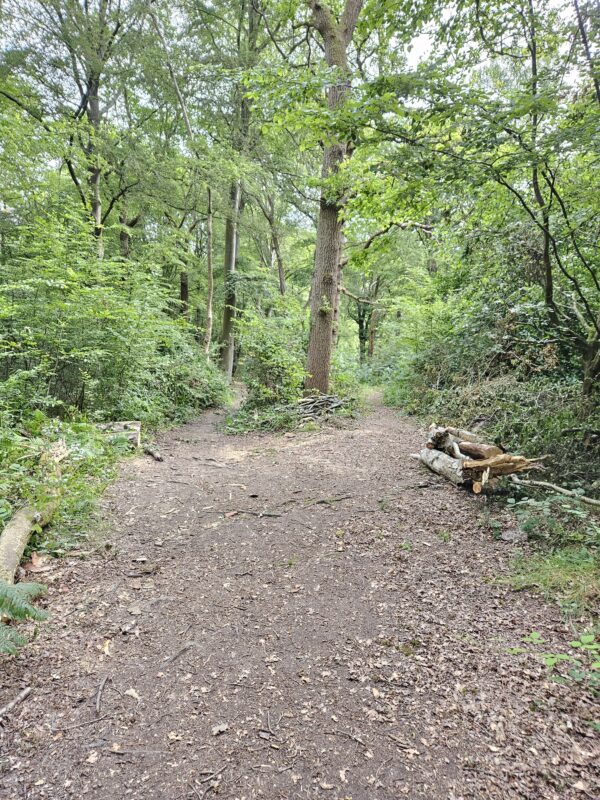
Yellow trail clear again
Preparing logs for winter
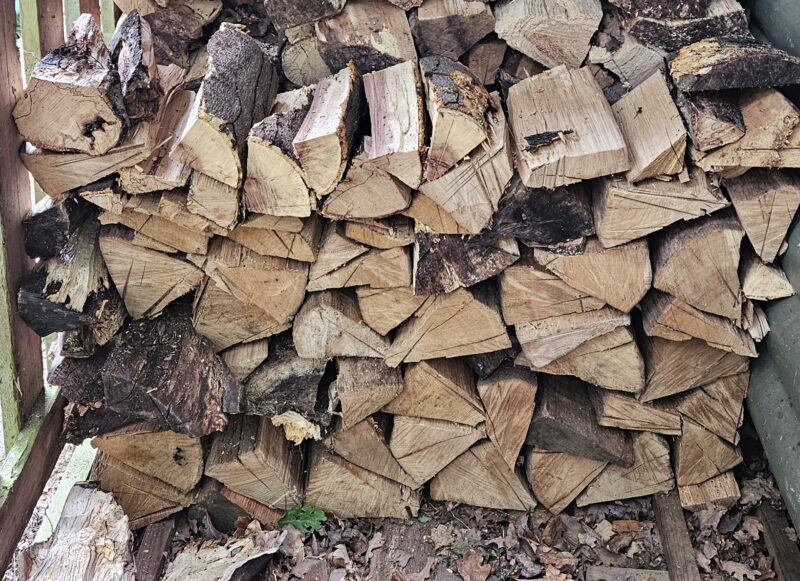
Seasoning split logs
Today the Fongw team split up into two groups to collect and prepare logs for sale in winter.
One team cut up and collected logs from dead tree trunks that had been laying seasoning on the ground for a while within the woods.
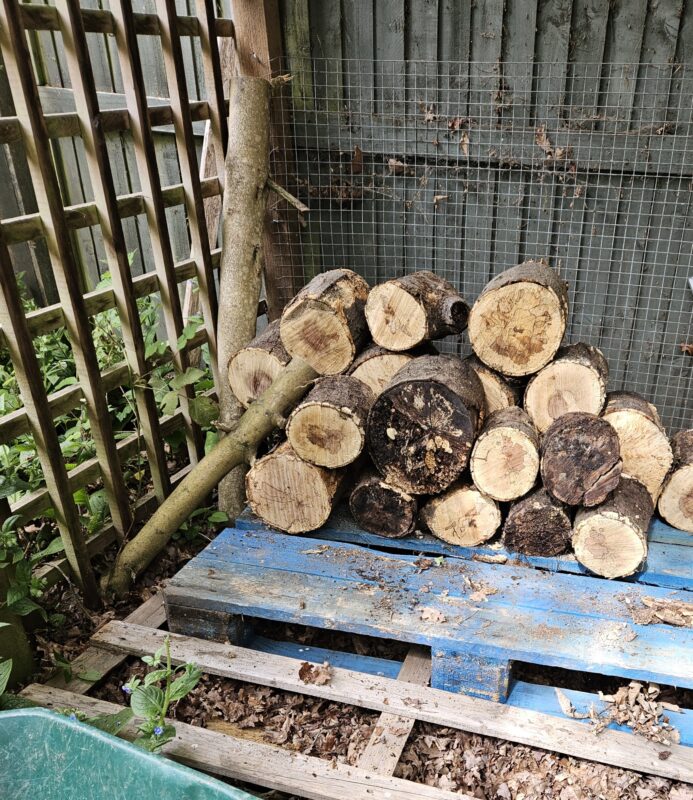
Crosscut logs waiting to be split
The other team used a log splitter to divide the logs into suitable sizes.
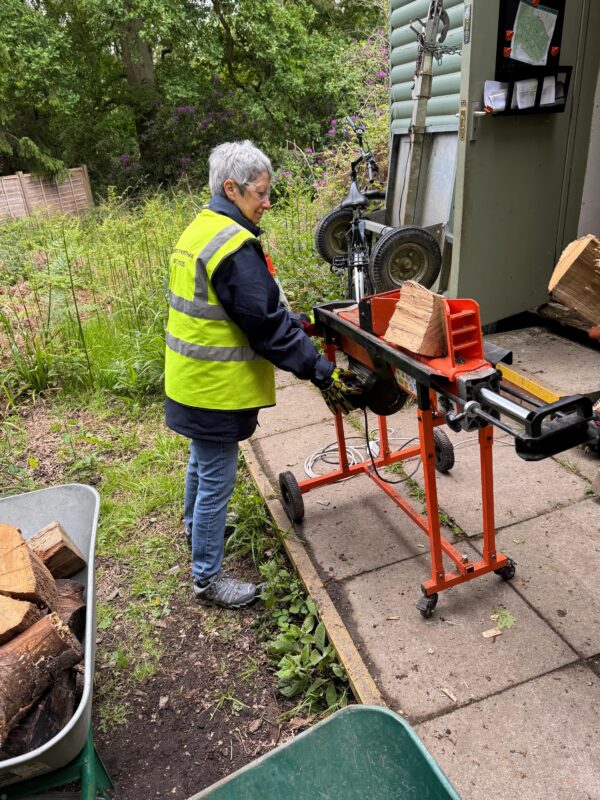
Log splitter
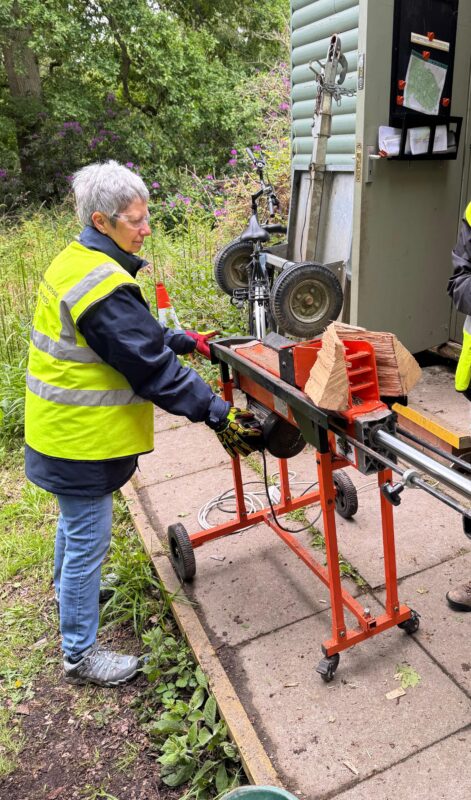
Splitting log with log splitter
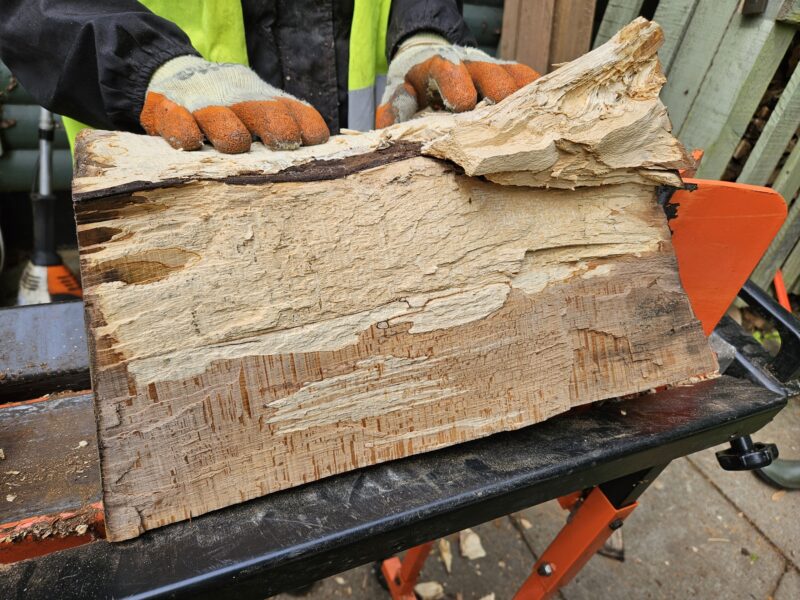
Large log on log splitter
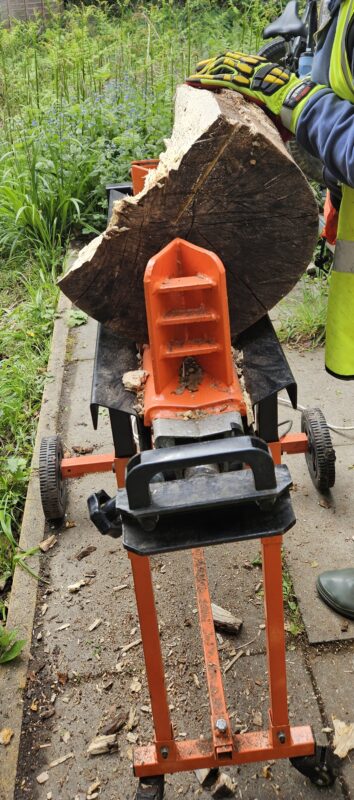
Log held in the log splitter
Gloves and safety goggles were worn for protection throughout the procedure.
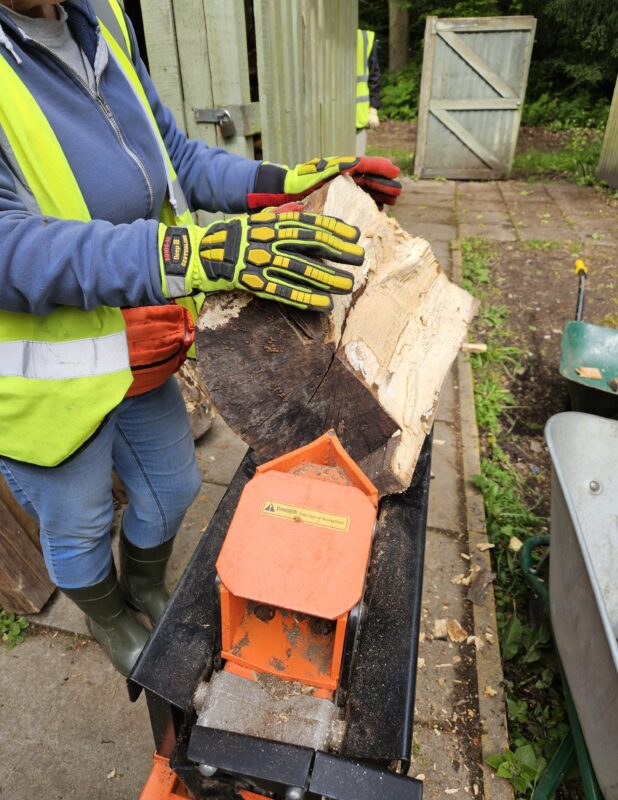
Log reducing in size after several splits
Once the logs were reduced to suitable sizes for burning, they were carefully stacked undercover in the wood store, allowing for airflow. These will then dry out, seasoning throughout the summer and autumn ready for sale during the winter months.
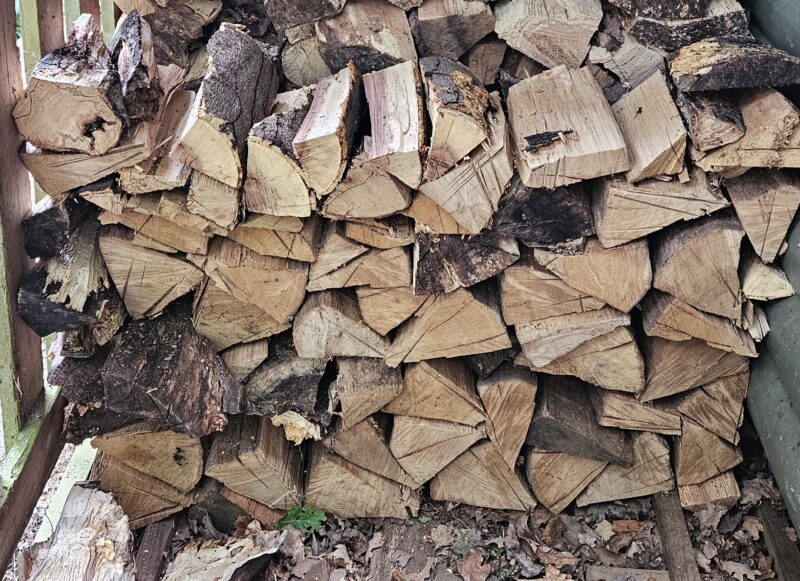
Seasoning stacked logs allowing for airflow
Recent survey of trail waymark posts
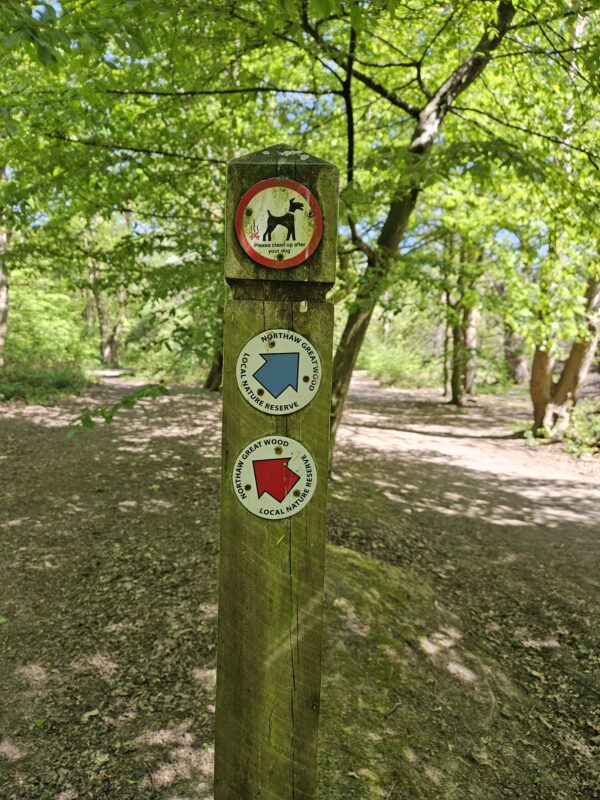
Waymark post for Red & Blue trail
In recent weeks the FONGW team have undertaken surveying the wooden waymark posts on the three main trails within the woods. Altogether the trails cover a distance of approximately 7.6 km (4.5 miles) and include 61 single posts, all of which have now been inspected and logged.
Over the coming months, the team will be replacing 6 posts which have rotted and are beyond repair. They will install 2 concrete spurs for a couple of posts in need of just a little support and will also reinstate any posts that are loose or wobbly. 2 posts will be relocated since over time the trails have deviated from the original route and therefore these waymark arrows no longer do their job.
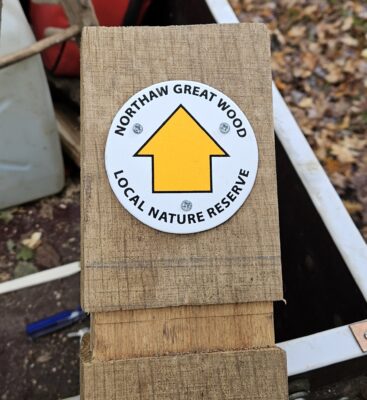
Routed waymark post ready for painting
A member of the team has been preparing the new posts. Each one is carefully routed ready to be painted with trail colour stripes once installed.
Approximately 15 coloured waymark arrow discs have either faded or have incurred damaged. These will be repainted or swapped for new ones.
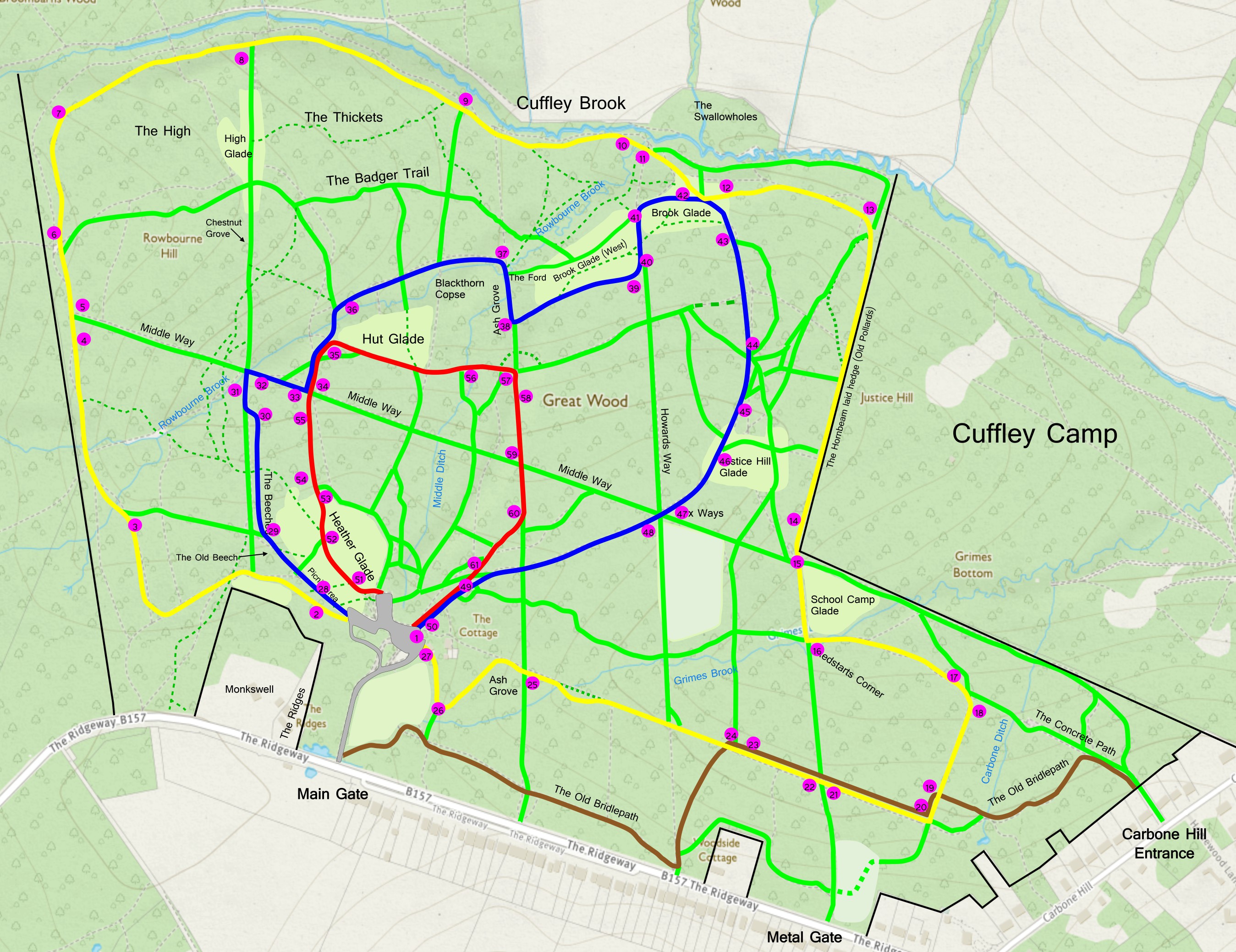
Finally, each post will be stencilled with its own individual number that can be cross referenced against a map. This will help the team locate a post in the future when is has been reported to them as damaged and in need of repair.
Removal of holly stumps using a winch
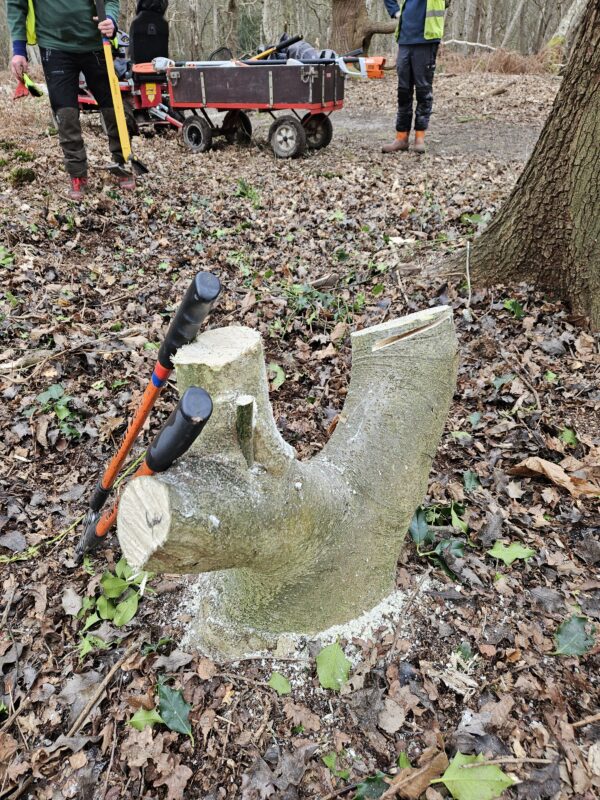
Large cut holly stump
The Friends team have been using a winch to remove the larger stumps of holly trees that they have previously cut down. This can be strenuous work as the tree roots don’t always come out of the ground easily.
The work needs to be carefully planned. The condition of the equipment is checked before use, then a suitable anchor tree is located to secure the winch near to the holly stump. It is important to consider the health and safety of the team during the procedure, ensuring everyone knows the dangers involving the use of steel cable that is under tension.
The nylon pulley strap is secured to the stump and then the snatch block winch pulley is attached to it. This is then ready for the steel cable to be joined to it.
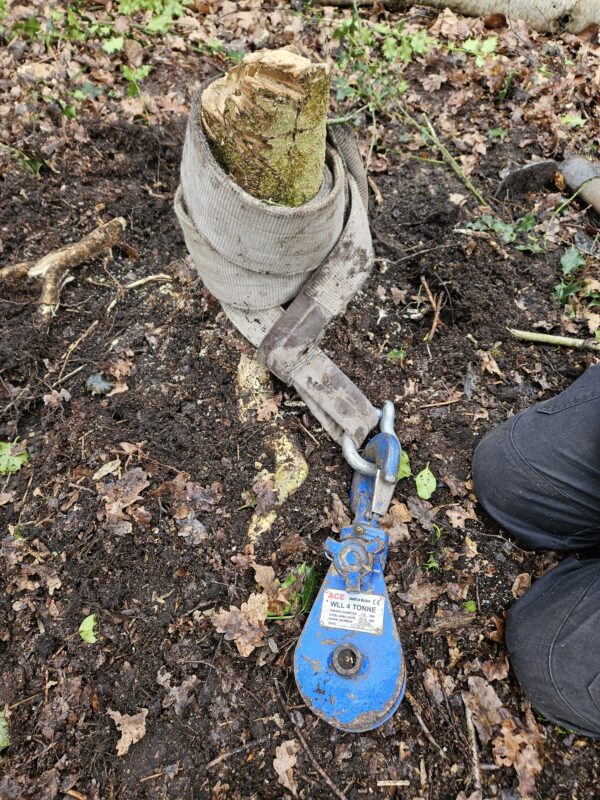
Pulley snatch block and nylon strap
The winch containing a steel cable is secured to an anchor tree with another nylon strap and safety cable. The steel cable is then pulled out and attached to the pulley.
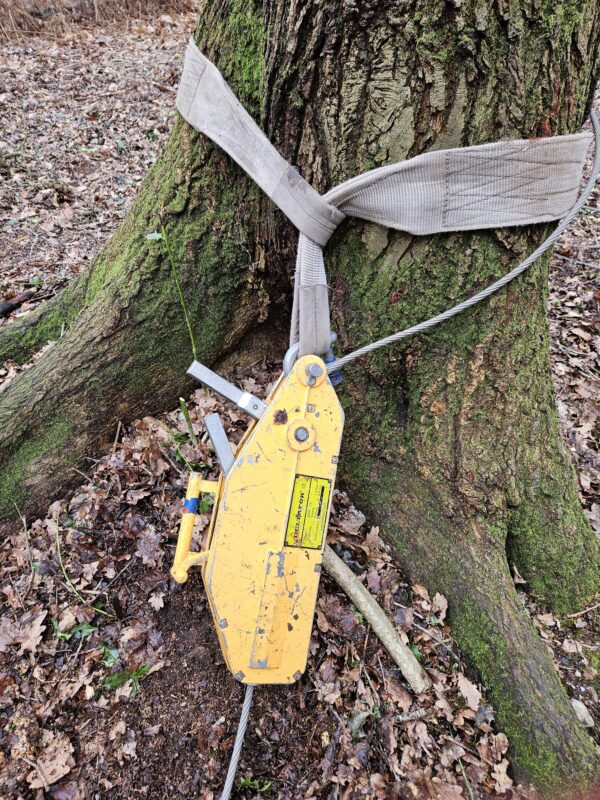
Winch with safety cable & nylon strap
The snatch block is then secured to the steel cable.
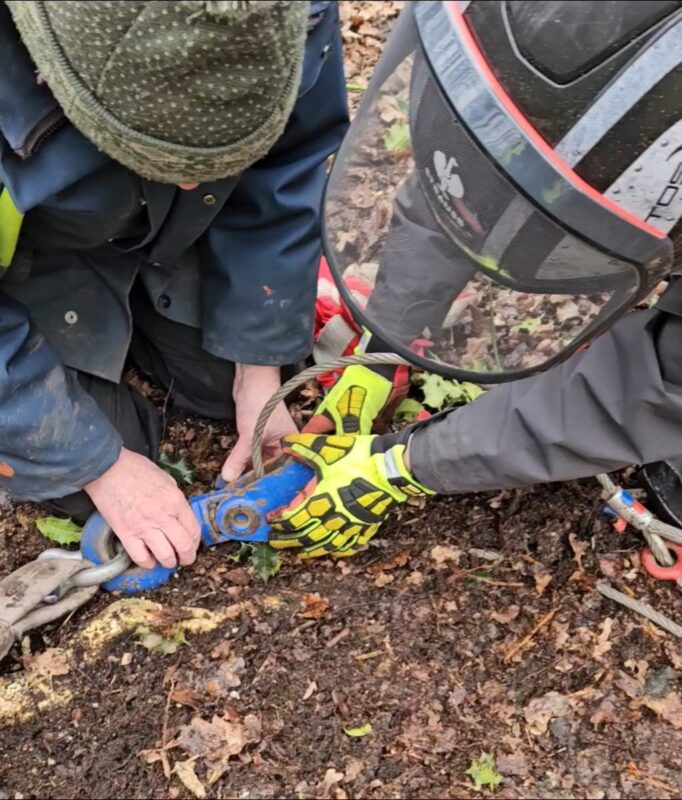
Attaching snatch block to steel cable
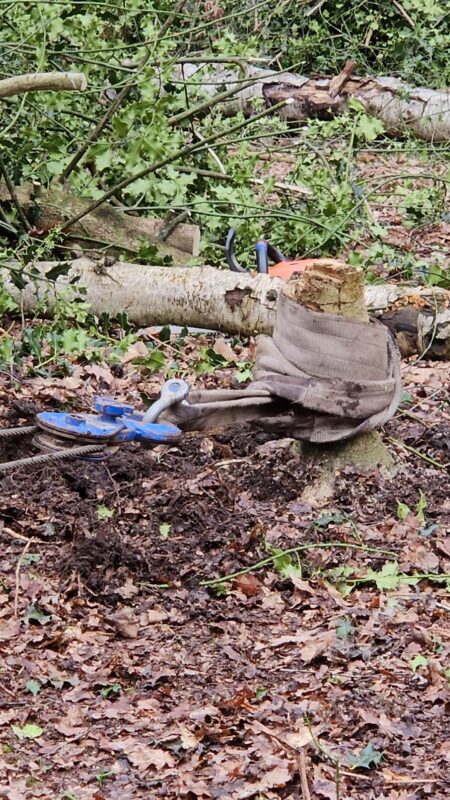
Pulley attached to stump and winch cable
A long extension pole handle is then connected to the winch ratchet and the tightening process begins…
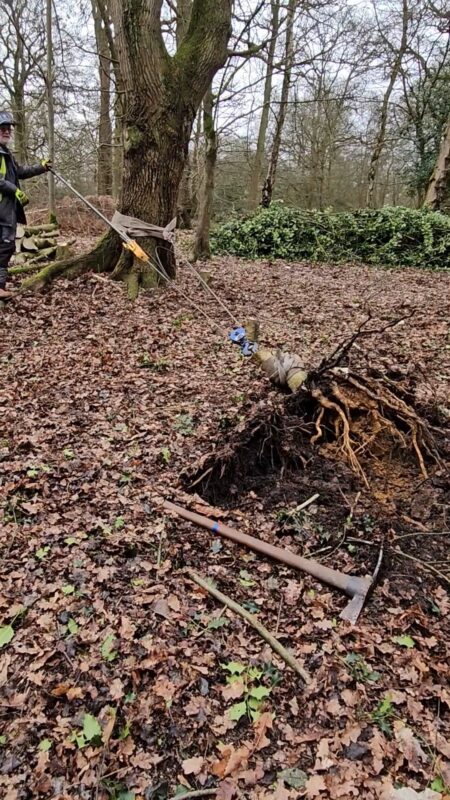
Complete winch assembly
Complete winch assembly
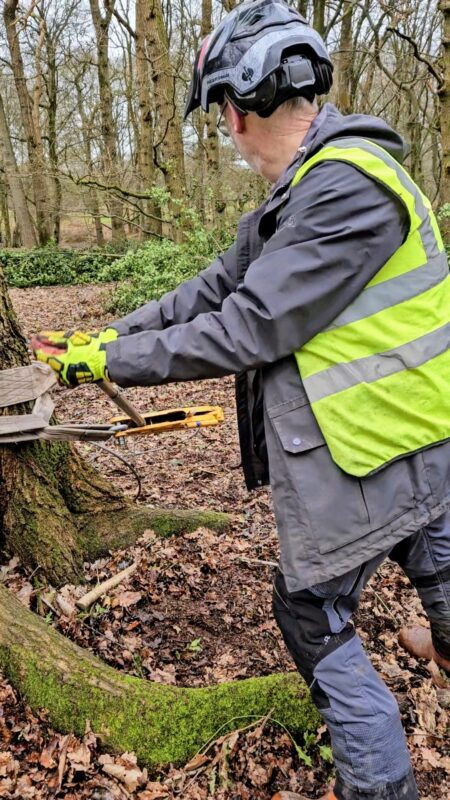
Winching
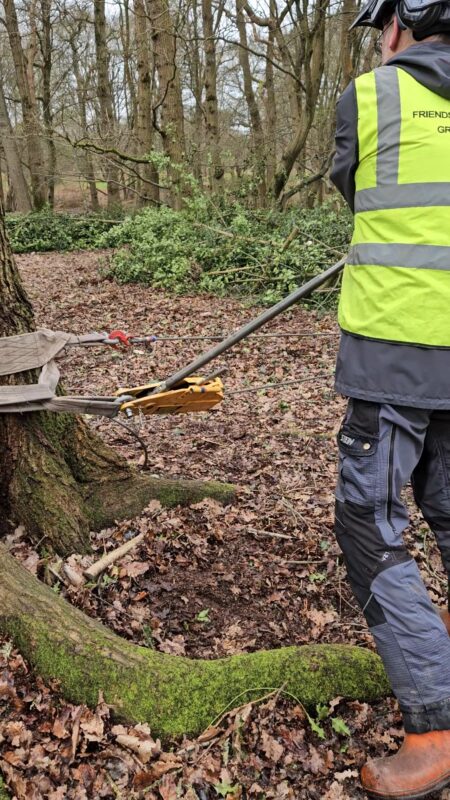
Winching
The holly stump is then steadily drawn out of the soil until it is freed.
Finally a mattock is used to lever out any roots that remain deeply entrenched in the ground. The stump with roots is then left in the woods to decompose creating a rich habitat for small creatures.
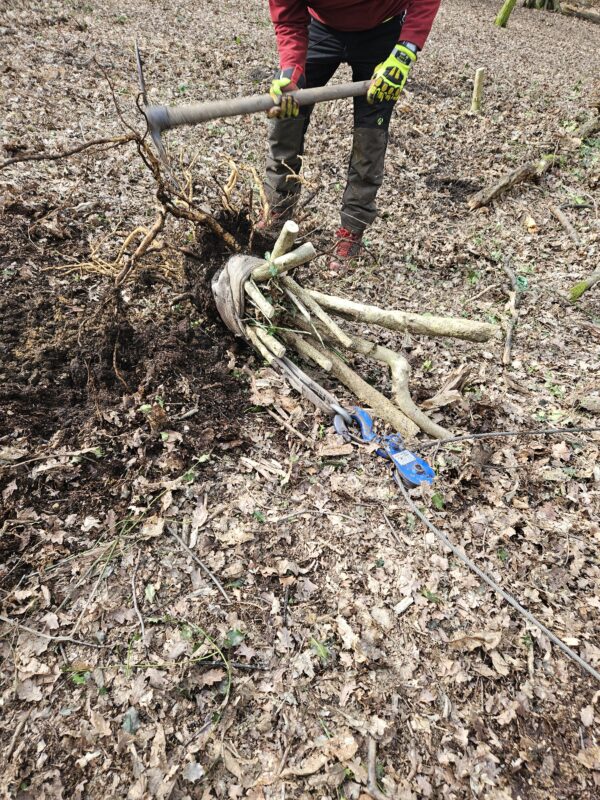
Using mattock to remove holly stump roots
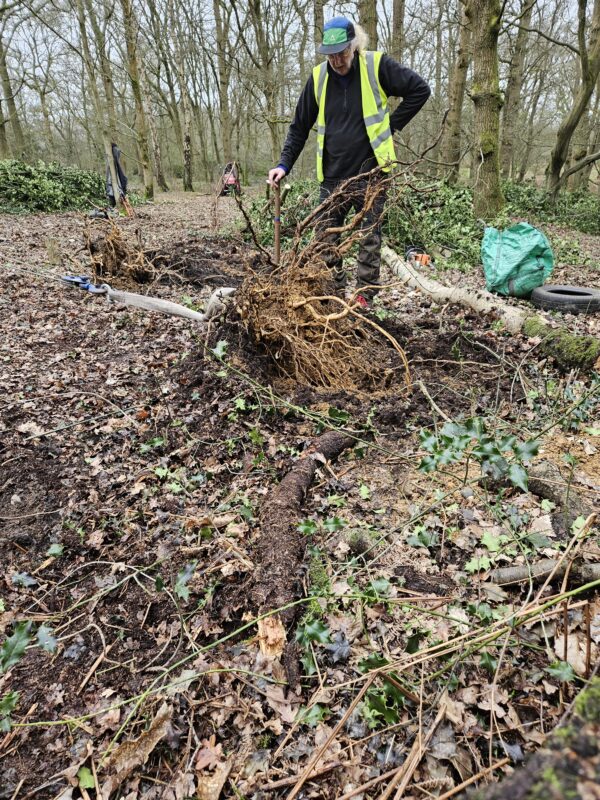
Job done!
And the job is done!
Protecting nesting birds and wildlife
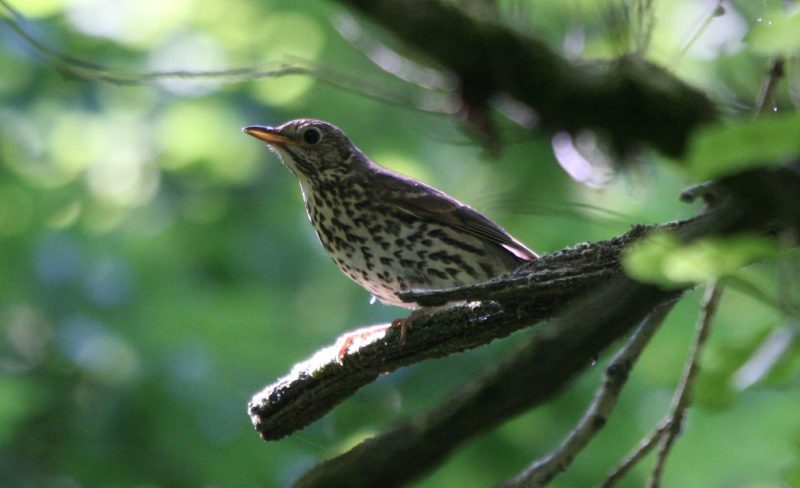
Nesting birds and wildlife are protected by the Wildlife & Countryside act 1981 which prohibits the cutting of hedges between 1st March and 31st August.
Therefore the Fongw team ceased cutting holly trees and bushes at the beginning of March and will resume again in September.
The many low and sparse holly saplings can still be carefully cut, roots popped and cleared as these are unable to support nesting birds. This management is necessary to prevent the holly adversely impacting the development of our well structured woodland.
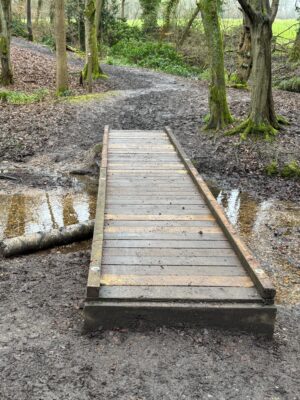
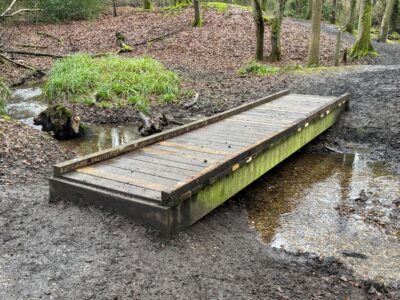
Bridge repair down by Cuffley Brook
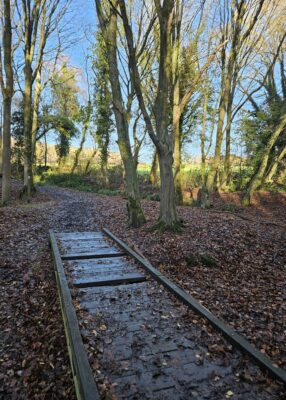
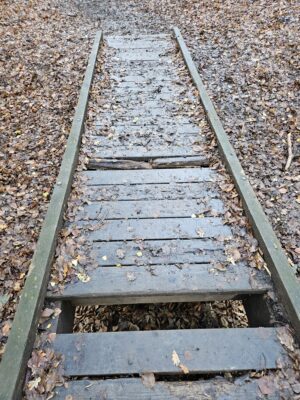
You may have noticed that this bridge on the Yellow Trail, down by Cuffley Brook has been in a bad way for sometime.
Recently, over several sessions, the “Friends of Northaw Great Woods” team have got together and have made the bridge safe again for walkers to use.
The nuts and bolts holding the bridge rails were corroded and tricky to remove. Replacement bolts were installed along with 10 new wooden planks.
Conditions were pretty muddy after weeks and weeks of rain!
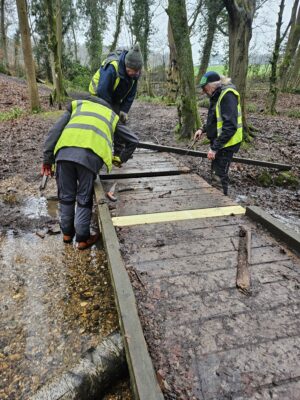
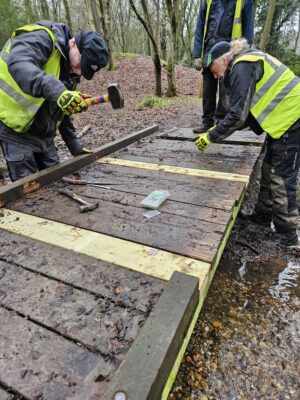
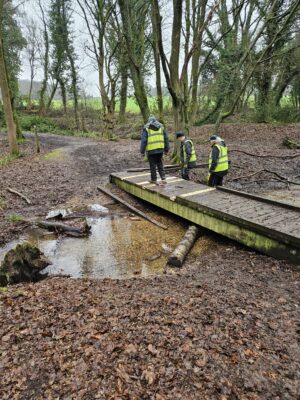
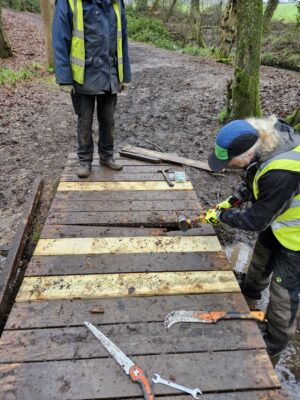
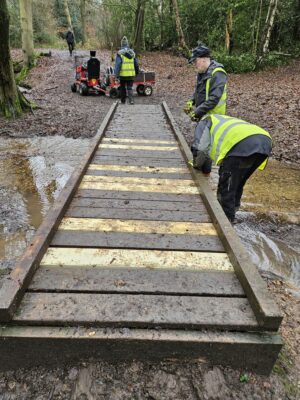
Finally the bridge is safe for walkers to use once again.
Posted in News
Comments Off on Bridge repair down by Cuffley Brook